No Colloquium on 02/09. We will resume the regular series soon.
Feb26
Recent Progress in the Accelerator on a Chip International Program (ACHIP)
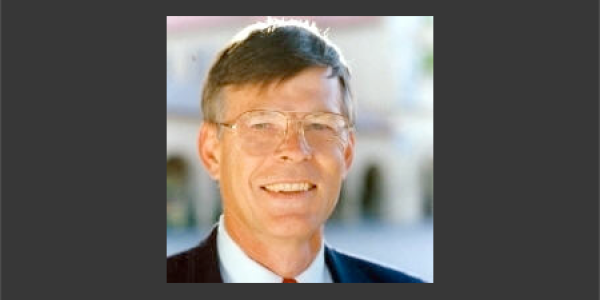
Robert L Byer, Stanford University
Monday, February 26, 2018
·
3:45 p.m.–5:00 p.m. PT
The idea for an accelerator on a chip grew from early interactions with SLAC in 1996. The Advanced Accelerator Division led by Robert Siemann elected to collaborate with a campus group led by R. L. Byer. Early success from the collaboration caught the eye of the Moore Foundation and resulted in a request for a proposal. The proposal was submitted, reviewed and funded in 2015.
The ACHIP collaboration now has more than 50 members, a dozen universities, and three national laboratories (SLAC, DESY and PSI) working to demonstrate a Dielectric Laser Accelerator (DLA) that fits into a shoe box. Early progress concentrated on accelerator structures in fused silica (850 MeV/m) and silicon (370 MeV/m), electron sources, beam location and steering, focusing, and bunching.
Designing, constructing and testing all accelerator elements at the nanoscale on a chip is challenging. Current status and future plans will be discussed.
About Robert L Byer
Professor Robert L. Byer is the William R. Kenan, Jr. Professor of Applied Physics at Stanford University. He has conducted research and taught classes in lasers and nonlinear optics at Stanford University since 1969. He has made numerous contributions to laser science and technology including the demonstration of the first tunable visible parametric oscillator, the development of the Q-switched unstable resonator Nd:YAG laser, remote sensing using tunable infrared sources and precision spectroscopy using Coherent Anti Stokes Raman Scattering (CARS). Current research solid state laser sources with applications to LIGO, gravitational wave detection, and to laser particle acceleration.
He served Chair of the Applied Physics Department from 1980 to 1983; 1999 – 2002 Associate Dean of Humanities and Sciences from 1984 to 1986 and served as Vice Provost and Dean of Research at Stanford University from 1987 through 1992.
Professor Byer is a Fellow of the Optical Society of America, the Institute of Electrical and Electronics Engineers (IEEE), the American Physical Society and the American Association for the Advancement of Science and the Laser Institute of America. In 1985 Professor Byer served as president of the IEEE Lasers and Electro-optics Society. He was elected President of the Optical Society of America in 1994. He served as President of the American Physical Society in 2012.
In 1996 Professor Byer received the Quantum Electronics Award from the Lasers and Electro-optics Society of the IEEE. In 1998 he received the R. W. Wood prize of the Optical Society of America and the A. L. Schawlow Award from the Laser Institute of America. In 2000 he was the recipient of the IEEE Third Millennium Medal and in 2009 he received the IEEE Photonics Award. He was honored with the Ives Medal and Prize by the OSA in 2009. He shared the Special Breakthrough Prize (shared with LIGO Scientific Collaboration) and the Gruber Prize in 2016 (shared with LIGO Scientific Collaboration). The LIGO collaboration was awarded the Nobel Prize in 2017 through the recognition of Rai Weiss, Kip Thorne and Barry Barish.
Professor Byer has published more than 500 scientific papers and holds 54 patents in the fields of lasers and nonlinear optics. Professor Byer was elected to the National Academy of Engineering in 1987 and to the National Academy of Science in 2000 and charter member of the National Academy of Inventors in 2012.
Audience: Public
In case you're interested
Upcoming events

No Colloquium. We will resume the regular series on the following Monday.

Feb16


