Light-matter interactions at extreme intensities: boiling the quantum vacuum at SLAC and beyond
Sebastian Meuren, Princeton University
At the so-called critical or Schwinger intensity the quantum vacuum becomes unstable with respect to electron-positron pair production. This strong-field regime of quantum electrodynamics (QED) plays an important role in extreme astrophysical plasmas, in upcoming laboratory high-energy density laser-plasma experiments, and at the interaction point of future high-luminosity lepton colliders. At SLAC's FACET-II the Lorentz boost of 10GeV electrons will be exploited to reach the QED critical field in the electron rest frame.
This experiment facilitates the first observation of strong-field vacuum breakdown and related phenomena. In the foreseeable future electromagnetic fields far beyond the QED critical one will become achievable, allowing us to study light-matter interactions in a regime where all existing theoretical calculations break down and qualitatively novel phenomena are conjectured to occur.
About Sebastian Meuren
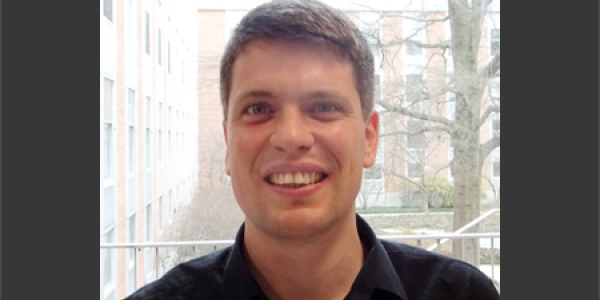
Sebastian Meuren obtained his Ph.D. degree from Heidelberg University in 2015. For his research, which has been carried out at the Max Planck Institute for Nuclear Physics, he received the Otto Hahn Medal from the Max Planck Society. Currently, he is finishing his postdoctoral research in the department of Astrophysical Sciences at Princeton University and he recently became the Principle Investigator (PI) of an experimental strong-field QED campaign at SLAC's FACET-II.
Audience: Public


