Extreme Electron Beams
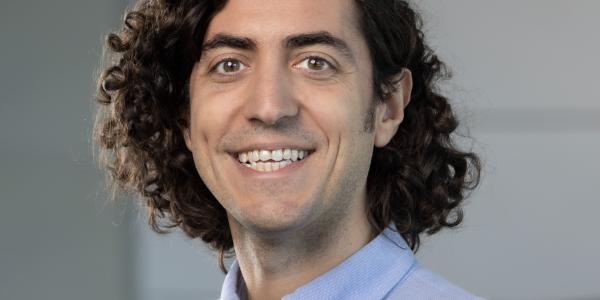
Dr. Claudio Emma, SLAC
Abstract:
High intensity relativistic electron beams are among the most versatile and powerful probes of the natural world. Progress in our understanding of the fundamental forces of nature, as well as the structure of matter, has gone hand in hand with improvements to beam brightness, intensity and control. Next generation experiments will require beams with unprecedented properties: bunch lengths of 10s – 100s of nm, peak currents in the Mega Ampere scale and peak electric fields exceeding 1 V/angstrom. These experiments will push the boundaries of our understanding in areas ranging from high energy physics, strong field quantum electrodynamics, laboratory astrophysics, ultrafast photochemistry and material science. Furthermore, ultrashort, ultrahigh current electron beams are envisioned as drivers for future light sources, advanced particle accelerators and laserless gamma-gamma colliders.
In this talk I will report on progress towards generating such extreme beams at SLAC National Accelerator Laboratory. I will highlight recent experimental work conducted at the FACET-II Facility which generated the first 100 kA peak current, petawatt peak power electron bunches in a particle accelerator. I will also outline a planned experimental campaign dedicated to increasing the peak current further from this result by an order of magnitude using plasma-based electron beam compression. Finally, I will discuss relevant applications of these beams focusing on driving advanced attosecond X-ray sources with high peak power and broad tunability.
About Dr. Claudio Emma

Dr. Claudio Emma is a Staff Scientist working in the advanced accelerator research department at SLAC National Accelerator Laboratory. He received his bachelor’s degree in physics from King’s College London, his master’s from Imperial College London and his PhD from UCLA with a focus on accelerator physics and high efficiency X-ray free electron lasers.
He was awarded the Bruno Touschek Young Investigator Award for research in elementary particle physics and particle accelerators in 2022 and the U.S. Department of Energy Early Career Research Program award in 2023 for research in generating and diagnosing extreme electron beams for advanced accelerator applications. His current research focuses on the
Audience:


