Exoplanet frontiers: Kepler & the next decade of NASA exploration
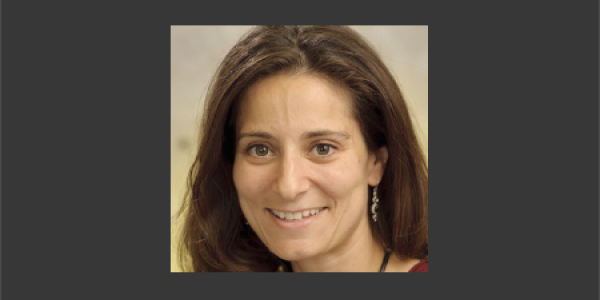
Natalie Batalha, UC Santa Cruz
On the eve of Kepler's launch in 2009, astronomers knew of a few hundred planets orbiting other stars in the Milky Way. Today, the discoveries spill into the thousands, and the sensitivity boundaries continue to expand. NASA's Kepler Mission unveiled a galaxy replete with small planets and revealed populations that don't exist in our own solar system. The final discovery catalog was delivered in the autumn of 2017 together with the survey completeness and reliability metrics required for studying exoplanet demographics as a function of size, orbital period, and host star properties. To date, we've learned that every late-type star has at least one planet, that terrestrial-sized planets are more common than larger planets within 1 AU, and that the nearest, potentially habitable earth-sized planet is likely within 5 pc. This knowledge has catalyzed a 30-year roadmap for NASA exoplanet exploration with the ultimate goal being the search for evidence of life beyond the Solar System. The launch of the Transiting Exoplanet Survey Satellite (TESS) this year and the James Webb Space Telescope (JWST) in 2021 will take us one step closer. As our collective effort shifts from Kepler to these new capabilities, the coming decade will shift from the study of exoplanet demographics to the characterization of exoplanet atmospheres.
About Natalie Batalha
Natalie Batalha is an astrophysicist working to detect and characterize planets orbiting other stars, or exoplanets, with the ultimate goal of finding evidence of life beyond the solar system. Batalha holds a bachelor's in physics from UC Berkeley and a doctorate in astrophysics from UC Santa Cruz. She served as the science lead for NASA's Kepler Mission from 2011 to 2017 and led the analysis that yielded the discovery in 2011 of Kepler-10b — the mission's first rocky planet outside our solar system. Currently, Dr. Batalha is leading the science community’s efforts to take its first observations of exoplanets with the James Webb Space Telescope scheduled to launch in 2021. As one of the co-leads of NASA’s Nexus for Exoplanet Systems Science, Dr. Batalha works to catalyze multi-disciplinary research related to the search for evidence of life beyond the solar system. After almost 19 years working at NASA Ames Research Center, Dr. Batalha recently joined the faculty of the Department of Astronomy & Astrophysics and UC Santa Cruz where she will continue efforts to strengthen interdisciplinary collaborations.
Audience: Public


