Bioorthogonal Chemistry, from conception to clinical translation
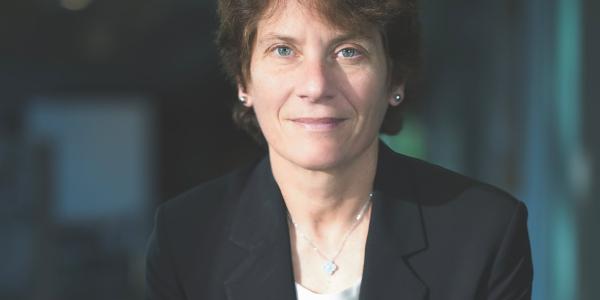
Carolyn Bertozzi, Stanford
Abstract: Bioorthogonal chemistry enables the performance of chemical reactions in biological, including living, systems. The concept was borne out of an unmet need for molecular imaging technologies focused on cell surface glycans, but quickly expanded to applications across basic and translational life sciences research. Today, bioorthogonal chemistries are enabling the development of bioconjugate therapeutics and drug delivery platforms, both major sectors of the biopharma industry.
About Carolyn Bertozzi

Bio: Carolyn Bertozzi is the Anne T. and Robert M. Bass Professor of Chemistry and Professor of Chemical & Systems Biology and Radiology (by courtesy) at Stanford University, and an Investigator of the Howard Hughes Medical Institute. She completed her undergraduate degree in Chemistry from Harvard University in 1988 and her Ph.D. in Chemistry from UC Berkeley in 1993. After completing postdoctoral work at UCSF in the field of cellular immunology, she joined the UC Berkeley faculty in 1996. In June 2015, she joined the faculty at Stanford University coincident with the launch of Stanford's Sarafan ChEM-H Institute.
Prof. Bertozzi's research interests span the disciplines of chemistry and biology with an emphasis on developing new therapeutic modalities that target disease-related glycobiology. She founded the field of bioorthogonal chemistry, for which she shared the 2022 Nobel Prize in Chemistry. Her group has invented targeted enzyme therapeutics for immune oncology, Lysosome Targeting Chimeras (LYTACs) for extracellular targeted protein degradation, antibody-lectin chimeras (AbLecs) for therapeutic applications, and site-specific bioconjugation methods for synthesis of next-gen antibody-drug conjugates. Her lab has also developed glycoproteomics technologies for disease biomarker discovery, point-of-care diagnostics for tuberculosis, and ultrasensitive antibody detection methods that are being used to diagnose early onset diabetes and viral infections. Her academic work has launched 12 co-founded biotechnology companies.
Prof. Bertozzi has been recognized with many honors and awards. She is an elected member of the Institute of Medicine, National Academy of Sciences, National Academy of Inventors and American Academy of Arts and Sciences. In addition to the Nobel Prize, she received the Welch Award in Chemistry, Heineken Prize for Biochemistry and Biophysics, Lemelson-MIT Prize, and a MacArthur Foundation Fellowship. She received the 2024 Priestley Medal from the American Chemical Society.
Audience:


